
Nemaha County Probate Records
Probate in Nemaha County is not handled by a separate probate court building. Kansas places probate work in the District Court, and the State Court Structure Map identifies the local probate venue as the Probate Division of District Court. That means estate files, will filings, guardianship papers, conservatorship matters, and related orders are part of the district-court file system. The local office for probate questions is the Nemaha County District Court at the courthouse in Seneca, with Clerk of the District Court Lisa Olberding listed by both the county court page and the 22nd Judicial District site.
Estate administration records may show a petition, a will, an order admitting a will, letters testamentary, letters of administration, notices to creditors, claims, accountings, inventories, receipts, and final settlement documents. Guardianship and conservatorship files can have a different access profile because they may include facts about a ward, medical care, private money, or family status. A person searching probate records should separate the public court index from the file contents. The index may confirm that a case exists while some filings still require clerk review before release.
The Kansas Judicial Branch describes District Courts as trial courts of general jurisdiction. For Nemaha County, that general jurisdiction includes civil, criminal, domestic, probate, juvenile, small claims, mental health, guardianship, and conservatorship matters. Probate users often need the same clerk channels used for other District Court files: Kansas CaseSearch, the courthouse terminal, phone or email contact with the clerk, and a copy request when a certified document is needed.
Nemaha County Probate Terms
Probate records use words that have a narrow court meaning. These terms help explain what kind of file is being searched and why a document may prove authority over an estate or protected person.
- Testator
- The person who made a will before death.
- Executor
- The person named in a will to carry out estate duties after appointment by the court.
- Intestate
- A death without a valid will, which usually requires administration under Kansas law.
- Guardianship
- A court case that appoints a person to make personal or care decisions for a minor or adult who needs protection.
- Conservatorship
- A court case that appoints a person to manage money or property for a protected person.
These labels can appear in case captions, filings, and orders. A certified copy of letters testamentary or letters of administration is often the document banks, title companies, and other offices ask for because it shows that the court appointed a person to act for the estate.
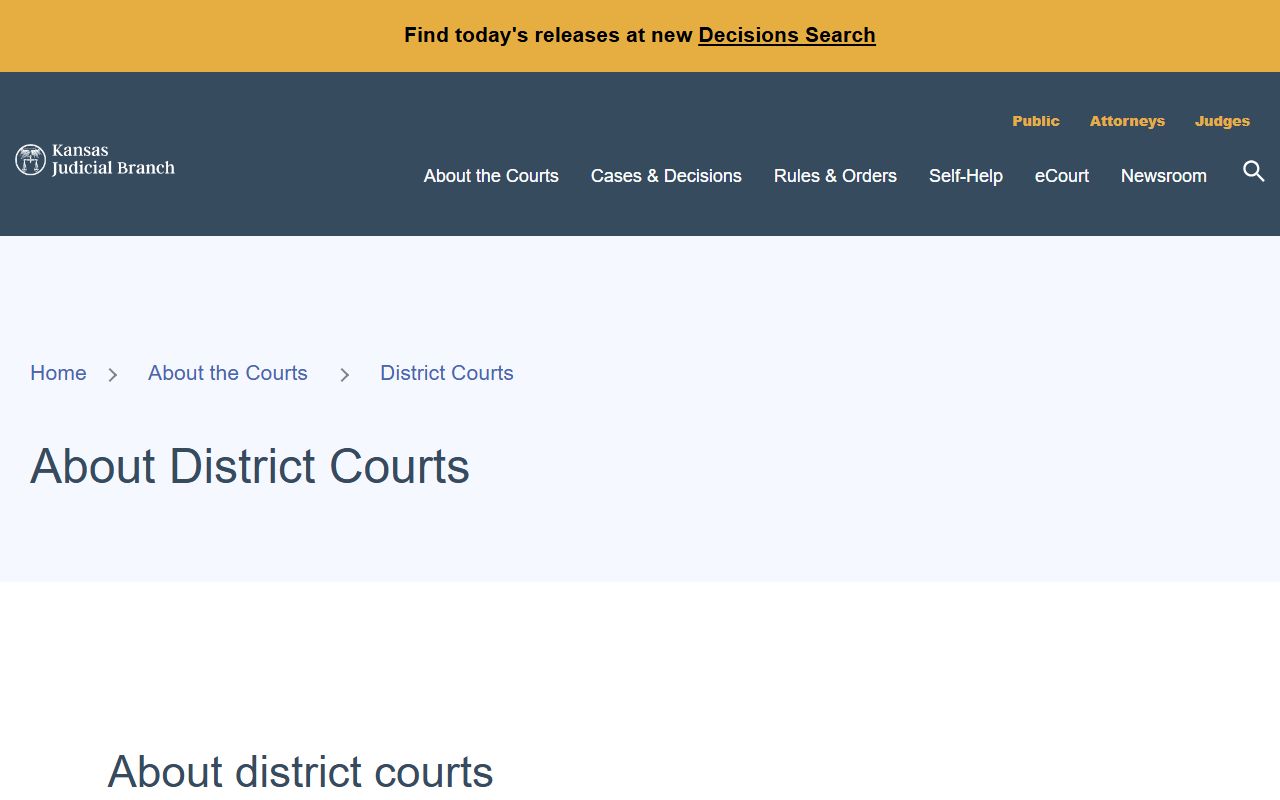
The Kansas Judicial Branch page on District Courts is the official state-level source for the District Court role. That statewide court structure is why Nemaha County probate records belong with the local District Court rather than a separate county probate office.
The Kansas district court overview shows why probate jurisdiction sits inside the same trial-court system used for other Nemaha County case types.
Search Nemaha County Probate Cases
Kansas CaseSearch is the current statewide public district-court lookup. Nemaha County's own District Court page still links a legacy Kansas District Court Records portal, but the official Kansas materials state the former public access portal has been replaced by CaseSearch. Probate records that are public may appear there, although the research did not locate a Nemaha-only probate database or a sample Nemaha probate file. When the online system does not show the record, the next channel is the courthouse terminal or the clerk's office.
- Start at Kansas CaseSearch and search by case number, party name, or another available public field.
- If the probate case does not appear, use the courthouse public terminal or contact the Clerk of the District Court for older files and document-level access.
- For a certified copy, identify the case number, party or decedent name, document type, and number of copies before contacting the clerk.
- For a guardianship, conservatorship, juvenile, or mental-health related file, expect access review because sensitive details may be restricted.
| Search field | Use for probate | Notes |
|---|---|---|
| Case Number | Best when known | Nemaha docket examples use county and case-type patterns, but a probate sample was not located. |
| Party Name | Decedent, petitioner, representative, guardian, conservator, or ward | Use name variations if the first search misses the file. |
| Business Name | Trust company, creditor, or care facility | Useful when an institution appears as a party. |
| Other role-based criteria | Public controls vary | Registered users may see more than public users. |
Note: Online search is a starting point, not a guarantee that every probate document is available to download.
Nemaha County Probate Court Contact
The probate contact is the District Court office at the Nemaha County Courthouse. The county District Court page names Chief Judge Hon. John L. Weingart, 22nd District Judge Hon. Laura Johnson-McNish, Magistrate Judge Scott Anson, and Clerk of District Court Lisa Olberding. The research did not locate a separate probate division counter, separate probate phone number, or separate probate fee page.
Probate Division of District Court
Nemaha County Courthouse
607 Nemaha St., Suite 1
Seneca, KS 66538-0213
785-336-2170 Option 5
District Court open until 5:00 p.m.; county offices generally Monday-Friday, 8:00 a.m.-4:30 p.m.
The county contacts table also lists District Court at 607 Nemaha, PO Box 213, Seneca, KS 66538, with fax 785-336-6450 and email nmcourt@carsoncomm.com. The 22nd Judicial District Nemaha page lists Lisa.Olberding@kscourts.gov and phone 785-336-2146. Use the clerk channel for certified copies, probate-file questions, and older paper records that may not be visible online.
Nemaha County Probate Fees
Local probate filing fees were not located in the official Nemaha County research. The safe fee facts are the Kansas court copy fees found in the court-records request source snippet. For a new probate filing, guardianship case, conservatorship case, or estate administration, confirm the current filing amount with the Clerk of the District Court before mailing papers or visiting the counter.
| Item | Amount |
|---|---|
| Local probate filing fee | Not published in located Nemaha sources |
| Plain district-court copy | $0.25 per page |
| Certified district-court document | $10 per document |
| Mailing, first five pages | $0.50 |
| Mailing, each additional page | $0.25 |
Probate records can overlap with vital records, but a death certificate is not a District Court probate copy. Kansas vital records are handled through KDHE and have their own eligibility rules. For the probate file, use the clerk. For a certified death certificate, use the state vital-records channel.
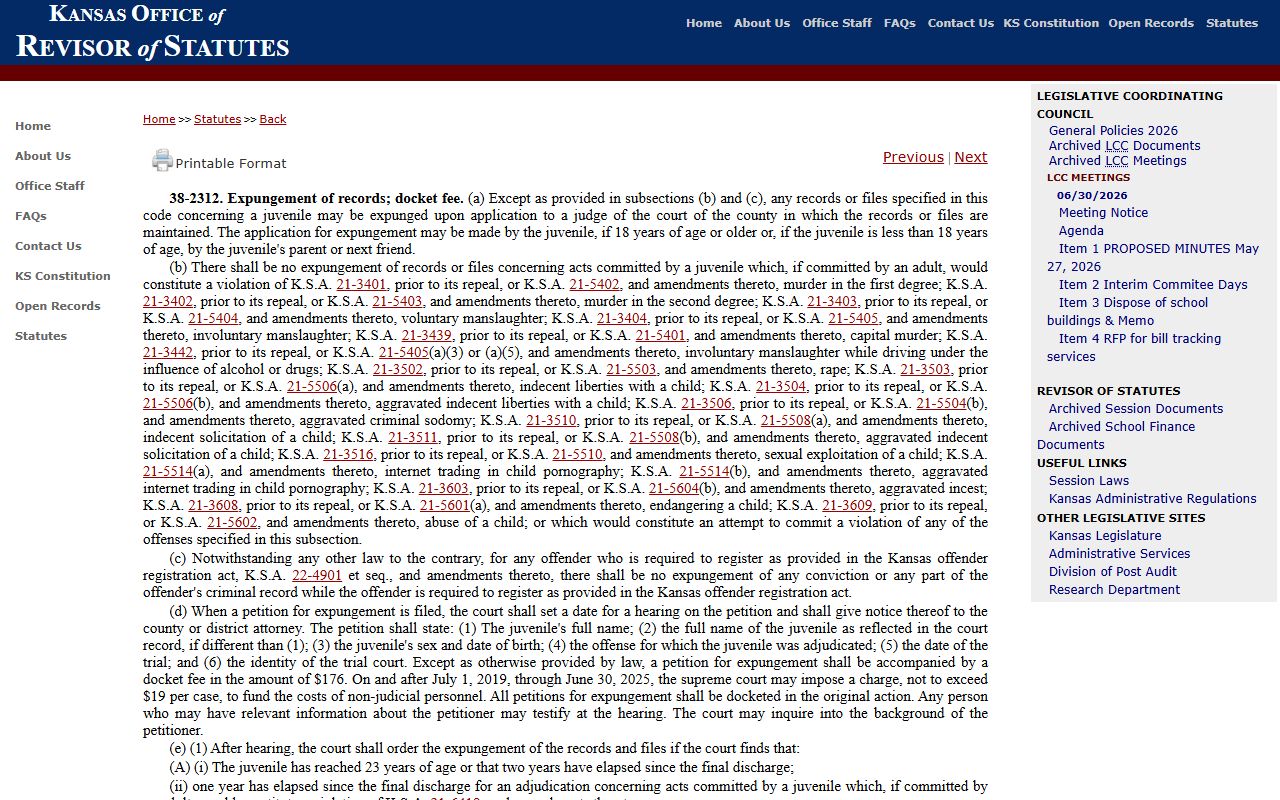
The probate page uses the juvenile expungement statute only for the public-access boundary, and the official K.S.A. 38-2312 text helps show why not every family-related court file is public.
What Nemaha County Probate Records Show
A Nemaha County probate file can show the type of matter, the case number, the petitioner, the decedent or protected person, interested parties, and each court event. In an estate, the documents may include the will, petition, proof of notice, creditor notices, orders, inventory, claims, accounting, receipts, and final settlement. In a guardianship or conservatorship, the file may show appointment papers, reports, orders, bonds, accountings, and limits on the guardian's or conservator's power.
| Record field | What it may show |
|---|---|
| Case number | The District Court tracking number for the probate matter. |
| Party names | Decedent, petitioner, representative, heirs, creditors, ward, guardian, or conservator. |
| Document title | Petition, will, order, letters, inventory, claim, accounting, or final settlement. |
| Hearing entries | Scheduled court dates or orders when the event is public. |
| Access status | Public, clerk-reviewed, sealed, or restricted in whole or part. |
Some probate-related services touch other county offices. The county's Senior Services and Maintenance pages are not probate record offices, but they document public-service locations and county building operations around the courthouse campus. Those sources help ground local access copy without turning them into probate filing channels.
The official Nemaha County Senior Services page is a local public-service source tied to the same county government environment that many guardianship and conservatorship users may encounter.
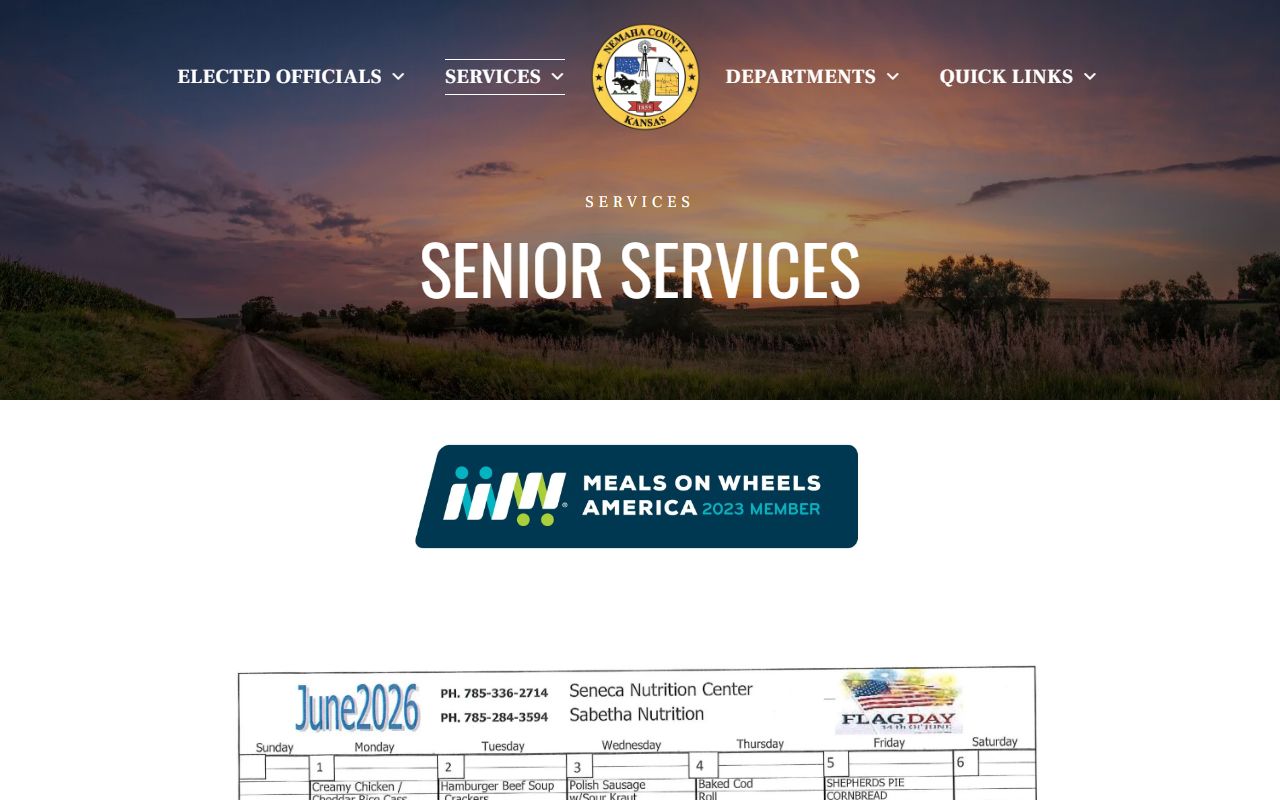
County service pages can help orient a courthouse visitor, but they do not replace the clerk as the probate record custodian.
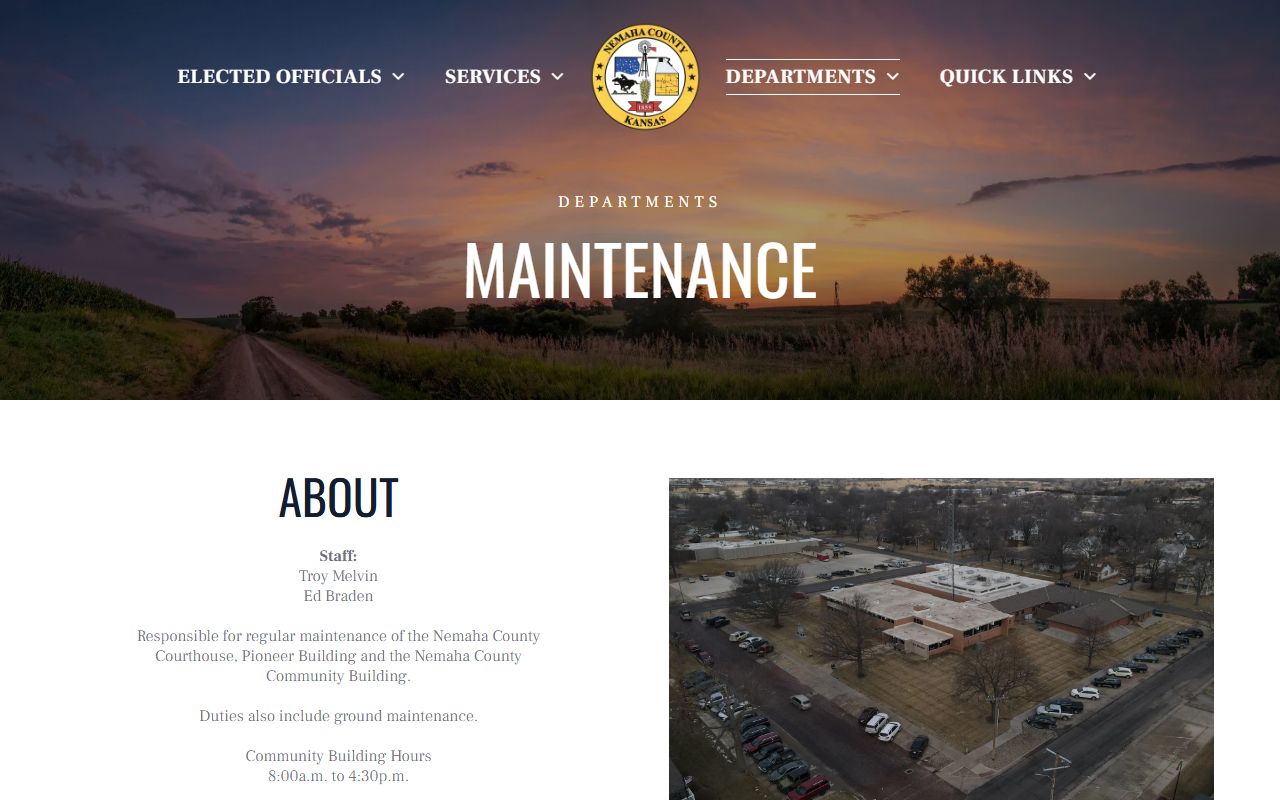
The Nemaha County Maintenance page identifies county buildings maintained around the courthouse setting.
Restricted Probate Division Records
Probate access is broadest for ordinary estate administration and narrower when the file involves a minor, a protected adult, medical information, mental-health care, juvenile facts, financial account details, or a sealed order. Kansas Supreme Court Rule 22 governs access to public electronic district and appellate case records, while Kansas open-records statutes set public-records policy for many agency records. Court files also have judicial rules, so a record can be public at the counter but limited online, or partly public with redactions.
Users should not assume that guardianship and conservatorship documents are open just because an estate case may be. The clerk may need to review a request before releasing copies. If a probate matter connects to a juvenile case, K.S.A. 38-2312 is one reason access can be narrower. If a case involves treatment court or a specialty-court completion issue, public access may also be shaped by separate court rules and statutes.
The Kansas Judicial Branch drug court information is included because specialty-court completion can affect expungement and record access under Kansas law.
Note: If a requested probate document is needed for a bank, title company, or court filing, ask the clerk whether a certified copy is required.